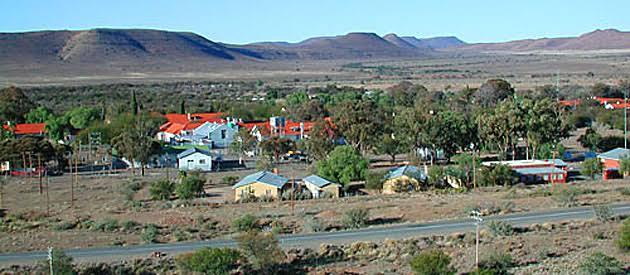
Development of Nelspoort Sanatorium
Founding
In July 1920 the state bought the farm Soutrivier — formerly Klipplaat, owned by Jacob de Clercq — for £694. Ten days later the sanatorium was established, made possible by a donation of £25,000 from Cape Town businessman John Garlick. His gift came on condition that the Cape Town Municipal Association raise a matching amount and that the state contribute £50,000. It was the first institution of its kind in the country. The Prince of Wales officially opened the building on 5 May 1924, during his visit to South Africa.
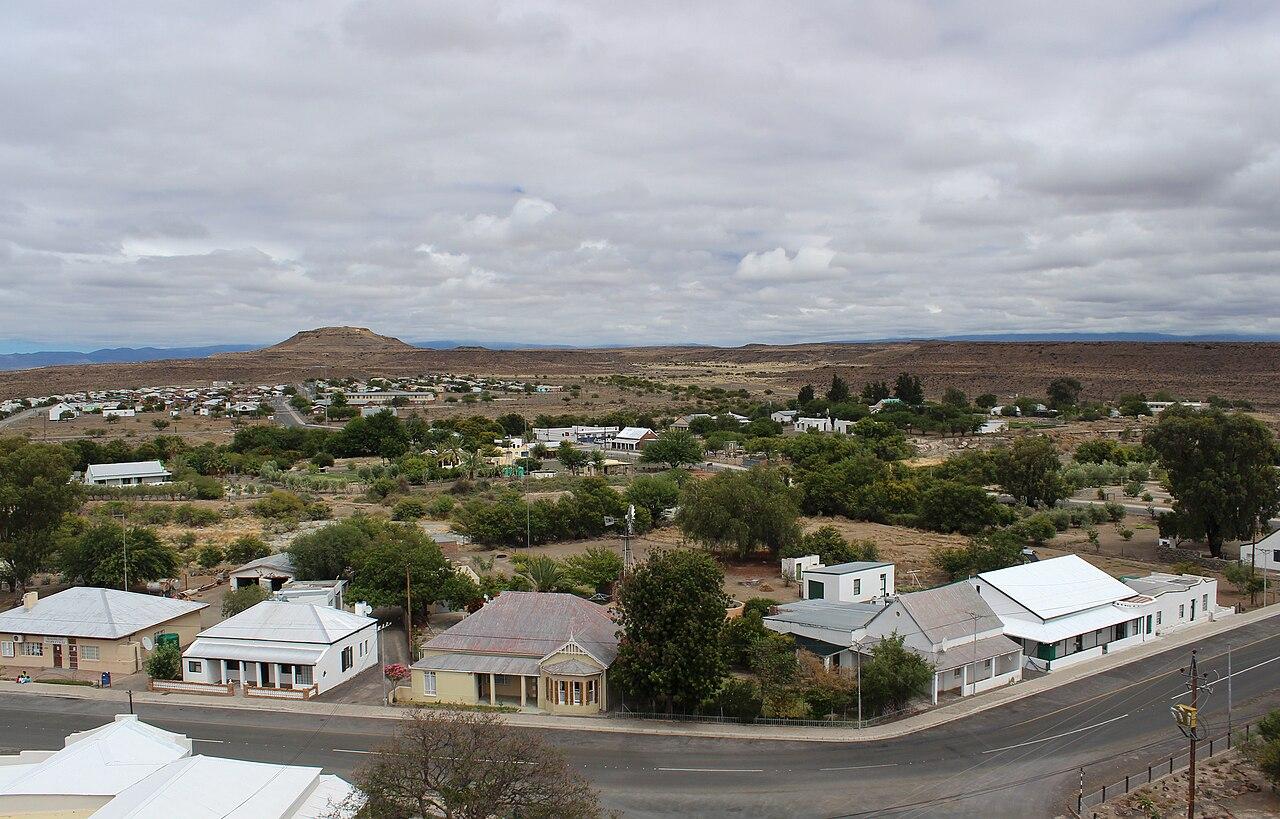
The sanatorium lies along the main railway line and the national road through Nelspoort, about 50 kilometres north-east of Beaufort West.
Caring for patients and staff
At first, Revs. J. Rabie and B.F.G. Bastiaanse of Beaufort West provided spiritual care for the patients and staff. In 1943, at the request of Rev. D. van N. Theron, the church ring recommended to the General Mission Commission (A.A.K.) that a dedicated worker be appointed for the sanatorium. Rev. A.P. Smith (emeritus, Middelburg, C.P.) was appointed in cooperation with the A.A.K. He moved to Beaufort West in December 1944 and began the work soon after.
Conditions were difficult. Transport between his home and Nelspoort was unreliable, services had to be held in an ordinary recreation hall rather than a consecrated church, and as a newcomer he had to compete with other clergy. He nevertheless quickly became popular — no small thing in demanding work, with many patients in need of constant care.
When Rev. Smith left for Pearson’s, Rev. J.N. Breedt was appointed in his place on 1 October 1947. He worked at the local primary school and congregation and, because the parish was so large, also served the community in Beaufort West and nearby Laingsburg. He was officially appointed minister of the Beaufort West church in 1946 and served there until his retirement.
Breedt completed his studies at the Wellington Theological School in January 1954. During a vacation he worked in various parts of the country, including among the white community at the sanatorium, and with others helped to develop a new curriculum for training employees and students, with special emphasis on theological education. In 1953, after his time at Wellington, he was appointed to serve the Beaufort West congregation, where he was known as a helpful and inspiring minister. His time there was highly valued, though the number of patients at the sanatorium always made the work demanding, and the A.A.K. later recognised his contribution to the sanatorium.
When Rev. J. Hugo (emeritus, Caravans) died in the summer of 1953, leadership of the sanatorium ministry passed to Rev. Breedt — a turning point for the church’s work at the sanatorium. His leadership was instrumental in stabilising the work previously led by Prop. D.J. Hattingh. In August, Rev. Breedt and his wife moved into their new home in Nelspoort, and the rest room, no longer needed, was decommissioned.
The mission church
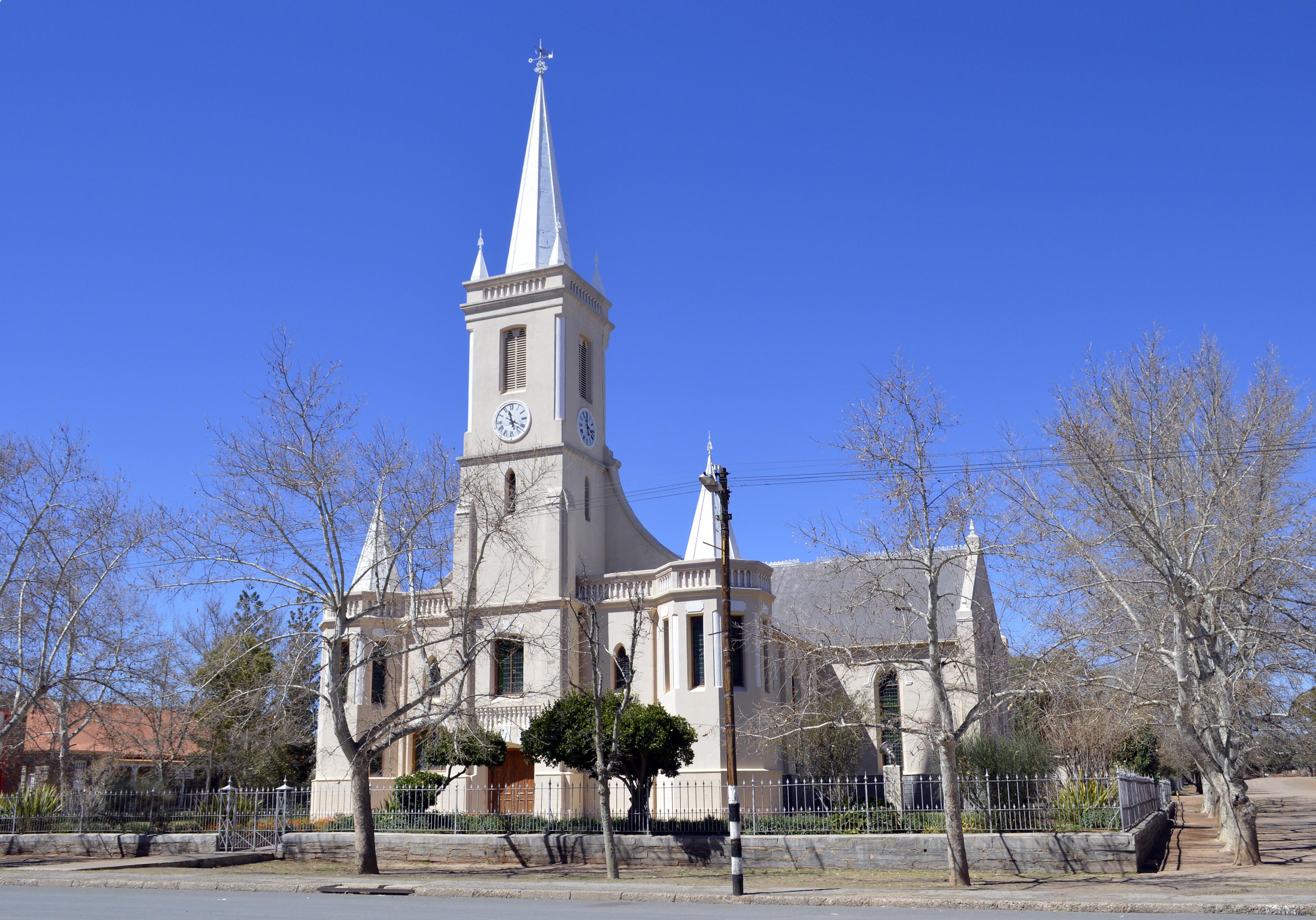
In early 1955 Rev. Hattingh accepted a call to Cedarville. A lasting testament to his dedication is the mission church, brought into use shortly after he left. He had argued for it as early as his first annual report, because by then most of the patients were non-white; white patients were increasingly treated at home or referred to urban centres for surgery.
Contributions from the surrounding congregation and support from the A.A.K. strengthened the building fund considerably. The construction tender of £540 went to a non-white builder, Mr Flips Pienaar, and the church was inaugurated on 1 October 1955.
After Rev. Hattingh left in April 1955, Rev. H.R. (Hans) Blok served as acting minister for several months. By then the A.A.K. no longer saw the need for a permanent worker at the institution: only 28 of the 248 patients still belonged to the Dutch Reformed Church, and just 40 were white. When Rev. Blok left for the mission field in October 1955, the A.A.K. transferred the parsonage to the Mission Church, and the pastoral care of white patients and staff was entrusted to the Gamka-East congregation. At the time of writing, the sanatorium served only non-white patients.
Largely derived from Die A.G. Gemeente Beaufort West 1861–1945, an unpublished manuscript by A.P. Smith.
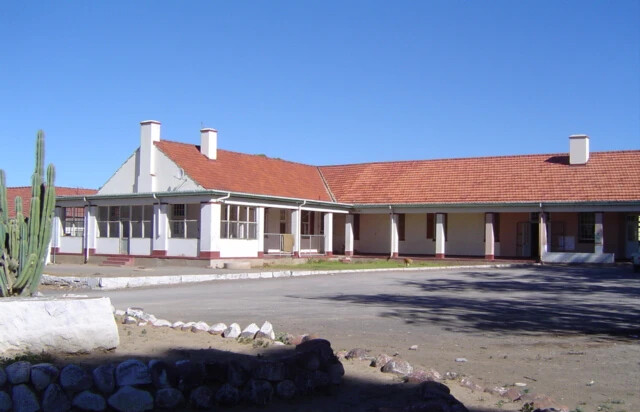
Nelspoort Sanatorium — opened in 1924, today Nelspoort Hospital.
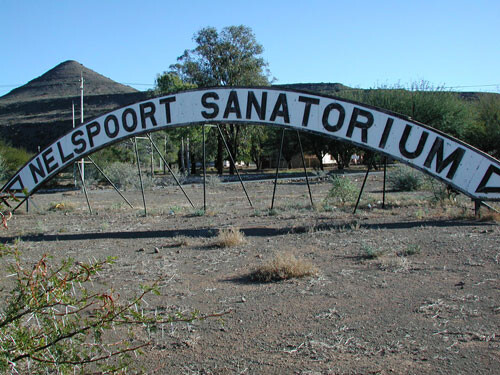
The sanatorium sign at the entrance.